
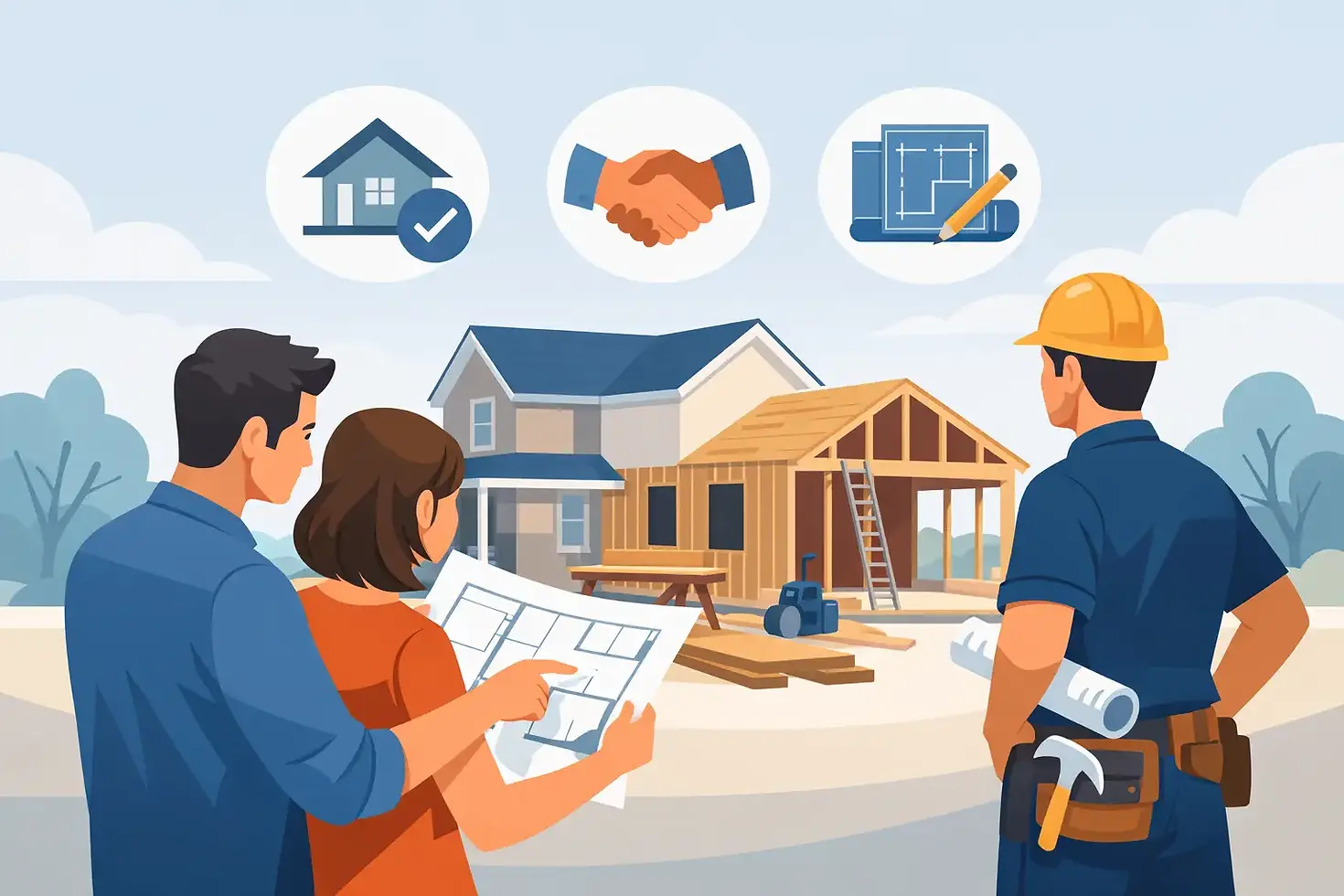
How to Choose a Home Addition Contractor
- americakeefer
- 1 day ago
- 6 min read
A home addition can solve a very specific problem. Maybe the kitchen is too tight for a growing family. Maybe an aging parent needs a comfortable ground-floor suite. Maybe your home office has taken over the dining room for long enough. In each case, the right home addition contractor is not just adding square footage. They are helping you make the home work better for daily life.
That distinction matters because an addition is one of the more complex projects you can take on as a property owner. You are not building on an empty lot. You are tying new construction into an existing structure, working around occupied space, managing permits, coordinating trades, and making decisions that affect function, comfort, and long-term value. The contractor you choose will shape every part of that experience.
What a home addition contractor should really bring to the project
A good home addition contractor does more than provide labor and a bid. They should be able to look at the house as a whole and understand how the new space connects to structure, layout, utilities, and everyday use. That includes practical issues like rooflines, foundation work, drainage, electrical load, HVAC capacity, and how traffic will flow from one room to the next.
Just as important, they should be able to guide the process clearly. Homeowners often focus first on finishes, but the early stages usually decide whether the project runs smoothly. Planning, scope definition, budgeting, scheduling, and permit coordination all need careful attention before framing begins. If those pieces are handled loosely, the build tends to get more expensive and more stressful as it moves forward.
In Southern California, local conditions add another layer. Site constraints, zoning requirements, energy rules, and neighborhood standards can affect what is possible and how long approval takes. A contractor with relevant experience in your market will usually spot issues earlier and offer better solutions.
How to evaluate a home addition contractor
The first thing to look for is direct experience with additions, not just general construction. New homes, interior remodels, and room additions overlap, but they are not identical. An addition requires tying into existing walls, roofs, and systems in a way that looks intentional and performs well over time. Ask what kinds of additions the contractor has completed, whether they have worked on homes similar to yours, and what challenges tend to come up in projects of your size.
Communication is another major factor, and it is often underestimated at the start. A contractor can have strong technical ability and still be difficult to work with if updates are inconsistent or questions go unanswered. During your early conversations, pay attention to how they explain the process, how thoroughly they answer concerns, and whether they seem organized. If communication feels unclear before the contract is signed, it usually does not improve once construction is underway.
It also helps to understand how they manage the job from start to finish. Some contractors are highly hands-on and stay closely involved in planning, scheduling, and field coordination. Others rely heavily on subcontractors with less direct oversight. Neither model is automatically wrong, but you should know who is responsible for daily management, who your point of contact will be, and how decisions will be documented.
Scope, pricing, and why the lowest bid can cost more
When comparing proposals, price matters, but clarity matters more. A lower number can look attractive until you realize the scope is incomplete. One bid may include demolition, engineering coordination, permit support, insulation upgrades, and finish work, while another may leave several of those items open. On paper, one contractor appears cheaper. In practice, the project may simply be less defined.
A reliable proposal should show what is included, what is excluded, and where allowances or variables exist. That gives you a better basis for comparison. It also reduces the chance of disputes once work begins.
There is always some uncertainty in construction, especially when working on an existing home. Hidden conditions behind walls or below floors can change the plan. That said, an experienced contractor should be able to explain where the real risk areas are and where the budget is more predictable. Straightforward guidance is usually a better sign than an overly optimistic estimate that promises everything will be easy.
Design matters, but function matters more
Many additions start with a simple goal: add a bedroom, enlarge a kitchen, build out a family room, or create an ADU-style living space where allowed. The best results come from looking beyond the label of the room and focusing on how it will actually be used.
For example, a bigger kitchen is not automatically a better kitchen. If the circulation is awkward, storage is poorly planned, or the addition creates a disconnected layout, the extra square footage may not improve daily living as much as expected. The same is true for primary suites, offices, bonus rooms, and rental-ready spaces. Good building work should support real routines, not just add area.
This is where a thoughtful contractor adds value. They can help identify when a plan is worth expanding, when it should be simplified, and when a different approach may give better results for the budget. In some cases, a smaller, better-integrated addition can outperform a larger one that strains the house or the project cost.
Questions worth asking before you hire
You do not need to approach contractor meetings like an expert in construction, but you should ask practical questions. Find out how they approach pre-construction planning, what the permit process typically looks like, how change orders are handled, and how often you can expect progress updates. Ask about project timelines, not as a fixed promise, but as a realistic range based on similar work.
It is also reasonable to ask how they protect the existing home during construction. Dust control, site cleanliness, access planning, and safety all matter when work is happening around an occupied property. For families living in the home during the project, these details can make a significant difference in day-to-day stress.
You should also ask how they handle workmanship standards and final completion. A professional contractor should have a clear process for walkthroughs, punch-list items, and closeout. The goal is not just to finish the build, but to finish it properly.
Why process is often the difference between a good project and a bad one
Most property owners remember two things after a construction job is done: how the space turned out and how the process felt. Even a beautiful addition can be overshadowed by poor communication, missed expectations, or constant confusion.
A strong process creates stability. It means the scope is discussed carefully, selections are addressed at the right time, scheduling is actively managed, and issues are communicated early instead of after they become expensive. That level of management is especially important in additions, where existing-site conditions can introduce surprises.
For homeowners and property owners in markets like Ramona and greater Southern California, this kind of steady project leadership matters as much as craftsmanship. The work needs to be built well, but it also needs to be managed with care. That is where a relationship-driven builder stands apart. Keefer Development approaches additions with that mindset, focusing on practical design, dependable communication, and construction that serves the people using the space every day.
A home addition contractor should help you think long term
An addition is not just about what you need this year. It should support how you plan to live in the property over time. That may mean designing flexible space for a changing family, improving privacy between rooms, planning for aging in place, or making updates that strengthen resale appeal without overbuilding for the neighborhood.
There are trade-offs in every project. A larger footprint may increase utility and value, but it also increases cost, schedule, and structural complexity. Higher-end finishes may improve appearance, but they may not be the best place to spend if layout or infrastructure still needs work. A good contractor helps you weigh those choices honestly.
If you are considering an addition, take your time on the front end. Look for a home addition contractor who understands both construction and the practical demands of living in the space afterward. The best projects are not the ones with the fastest sales pitch. They are the ones built on clear planning, solid workmanship, and a shared understanding of what the finished space needs to do for you.


Comments